How Much Does Car Size Affect Fuel Costs on a Kerala Road Trip?
When planning a driving holiday through God’s Own Country, one of the first decisions you have to make is figuring out your transport. For most independent travellers, getting a car rental in Kerala is the easiest way to explore at their own pace. But as you scroll through the available vehicles, a common question pops up: should you just book the smallest car to save on petrol or diesel, or is it worth upgrading to a larger vehicle?
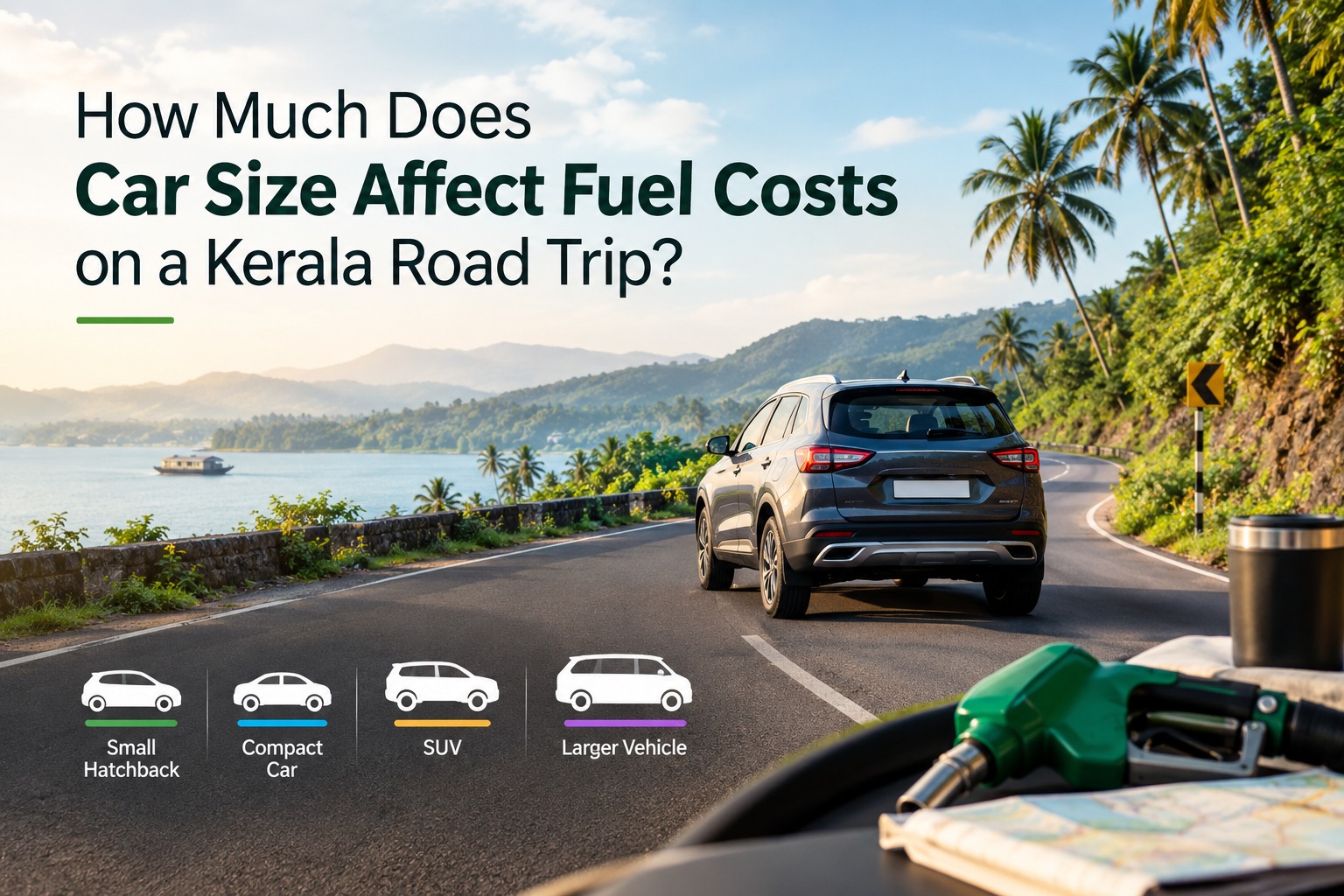
Many people assume that a larger car automatically means dramatically higher fuel expenses. While it is true that bigger vehicles generally consume more fuel, the reality on the ground is a bit more nuanced. The size and type of your rental car definitely influence your expenses, but the final fuel cost for a Kerala road trip depends just as much on the region’s unique driving conditions, your passenger load, and how you drive.
The Reality of Driving Conditions in Kerala
To understand how car size affects fuel consumption, you first have to look at the environment. Kerala is not a state characterized by endless, straight, high-speed expressways. Instead, it features a mix of dense urban traffic, winding coastal routes, and steep, twisty mountain roads.
If you are navigating the heavy city traffic of Kochi or Trivandrum, you will be doing a lot of stop-and-go driving. In these conditions, a large, heavy vehicle requires more energy to get moving from a standstill compared to a lighter car, which directly affects your rental car fuel efficiency. Similarly, the narrow and often congested roads connecting towns like Kottayam and Kollam require frequent braking and accelerating to accommodate passing buses, auto-rickshaws, and pedestrians.
On the other hand, if you are heading up into the Western Ghats to places like Munnar, Thekkady, or Wayanad, the dynamic changes. Hill roads demand more engine power. While a small car might be highly efficient on a flat highway, loading it up with passengers and luggage and forcing its small engine to pull up steep inclines can cause it to burn fuel at a surprisingly rapid rate.
Matching Car Size to Your Travel Needs
When browsing options for a self-drive car rental Kerala, you will generally find vehicles categorized by size. Here is a practical look at how different sizes handle the roads and impact your wallet.
Small hatchbacks are usually the go-to choice for solo travellers or couples. Because they are lightweight and have smaller engine capacities, they consume the least amount of fuel during standard driving. They are incredibly easy to squeeze through narrow village lanes or park in tight city spots. If your trip is mostly along the coast or between major towns with just a couple of soft bags in the boot, a hatchback is incredibly cost-effective.
Compact cars, typically compact sedans or premium hatchbacks, are ideal for small families. They offer a bit more boot space and legroom without adding a massive amount of weight. The fuel consumption is marginally higher than a basic hatchback, but the added comfort for a family of three or four usually justifies the slight dip in mileage.
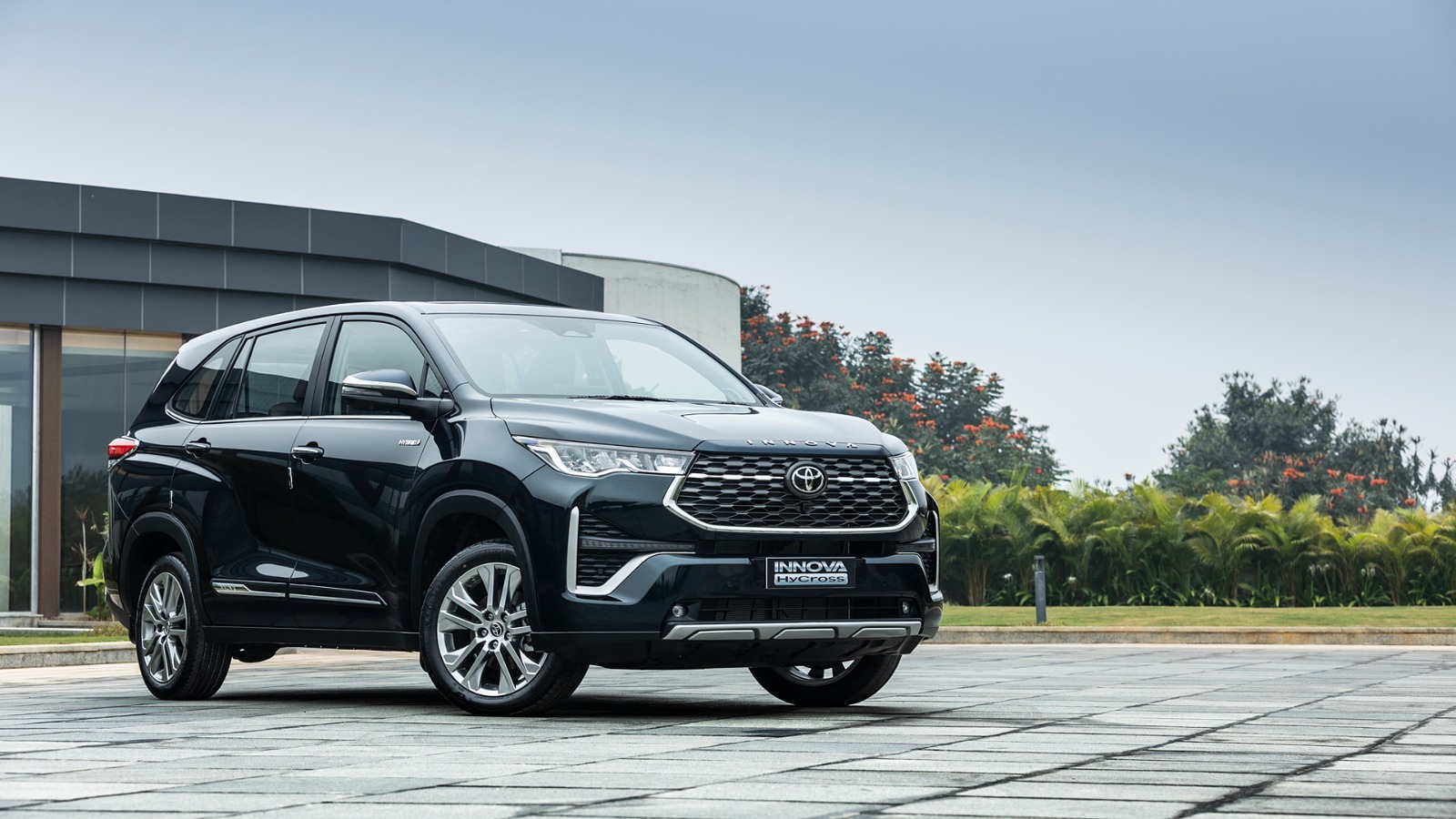
Larger SUVs are the standard choice for full families and groups of friends. Because of their heavier chassis, larger tyres, and bigger engines, their baseline fuel efficiency is lower. However, an SUV provides better ground clearance for rough patches and a more comfortable ride over long distances.
Bigger vehicles, such as multi-purpose vehicles (MPVs), become necessary when you are travelling with more than five passengers or carrying heavy, bulky luggage. These are the heaviest options available for a rent a car without driver in Kerala. They naturally consume the most fuel, but they split the cost among a larger group, often making them cheaper per person than hiring two small cars.
Fuel Efficiency vs. Total Trip Practicality
There is a distinct difference between laboratory fuel efficiency and real-world practicality. It is tempting to choose the absolute smallest vehicle when looking for an affordable car rental Kerala, purely to save on daily rates and petrol. But you have to consider the stress on the vehicle.
Imagine putting four adults and their heavy suitcases into a tiny hatchback and pointing it toward the steep, winding roads of Munnar. The small engine will have to work exceptionally hard, often staying in lower gears at higher RPMs to manage the climb. This driving style drastically reduces mileage. In this scenario, a slightly larger car with a more powerful engine might handle the weight and the hills much more effortlessly. Even though the larger car has a lower official mileage rating, its real-world consumption in the hills might end up being very similar to the overworked small car, while offering a significantly safer and more comfortable ride. Ultimately, the best car for a Kerala road trip is the one that comfortably fits your group without being pushed beyond its limits.
Practical Tips for Reducing Fuel Costs
Regardless of which size you choose for your Kerala road trip car rental, there are straightforward ways to keep your fuel gauge from dropping too quickly.
Choosing the right vehicle size is step one. Don’t rent a massive seven-seater if there are only three of you travelling, but don't cram five people into a mini-car just to save a few rupees.
Avoid unnecessary idling whenever possible. It is common to leave the engine running to keep the air-conditioning on while waiting for someone outside a shop or at a railway crossing. Idling burns a surprising amount of fuel, especially in larger engines.
Maintaining steady speeds is another highly effective tactic. While Kerala’s roads don't always allow for highway cruising, try to avoid aggressive acceleration followed by hard braking. Driving smoothly in traffic and keeping a gentle foot on the pedal saves fuel and makes the ride much less nauseating for your passengers on those twisty hill roads.
Always check your tyre pressure. Rental cars frequently change hands, and tyres slowly lose air over time. Under-inflated tyres create more rolling resistance on the asphalt, forcing the engine to work harder.
Be smart about your luggage. Avoid carrying excessive, unnecessary weight. Every extra kilogram requires more energy to move. Also, try to keep everything inside the boot rather than strapped to the roof, as roof luggage ruins the car's aerodynamics and severely hurts fuel efficiency.
Use your air-conditioning sensibly. While AC is a necessity in Kerala’s tropical humidity, running it at its absolute maximum setting all day puts extra strain on the engine. If you are driving through the cooler mountain air of Thekkady or Wayanad, rolling down the windows and turning off the AC at lower speeds can give your mileage a noticeable boost.
Finally, plan your routes efficiently. Getting lost or taking longer, heavily congested routes adds unnecessary kilometres and engine-running time to your day.
Making the Right Choice for Your Car Rental in Kerala
At the end of the day, fuel consumption is just one piece of the puzzle. The cheapest rental car is not always the one with the lowest daily rate or the smallest engine. If you are uncomfortable, if your luggage doesn't fit, or if the car struggles to climb a hill, the few hundred rupees saved on petrol won't matter.
When finalizing your car rental in Kerala, look at the big picture. Base your decision on an honest assessment of your passenger count, the volume of your luggage, the steepness of the routes you plan to take, and your expected budget. By balancing the rental price and fuel consumption against the comfort and capability of the vehicle, you will guarantee a much smoother, more enjoyable road trip through one of India's most beautiful states.