Planning a drive across Kerala is one of the most rewarding ways to experience the state. From the winding climbs through spice-scented hills to the coastal corridors lined with coconut groves, driving yourself provides a level of freedom that buses and pre-packaged taxi tours simply cannot match. However, transport often turns into one of the single largest expenses of the entire journey. Many travellers assume that securing an affordable car rental Kerala itinerary simply means picking the lowest daily rate displayed on a booking portal.
In practice, the base price of a rental car is only the opening figure on your balance sheet. When you rent a car in Kerala, your actual day-to-day running costs will depend heavily on the vehicle category you select, the terrain you navigate, how you handle fuel, and the specific terms hidden inside your contract. Making an informed choice before you set out is the easiest way to prevent avoidable expenses from eating into your holiday budget.
Understanding the True Cost Beyond the Daily Rate
The headline price displayed on a rental website can be deceptive. Two different vehicles might carry identical daily rental rates, yet end up costing dramatically different amounts by the end of a ten-day journey. True travel expenses include fuel consumption, security deposit handling, excess mileage charges, toll passes, and pickup or drop-off logistics
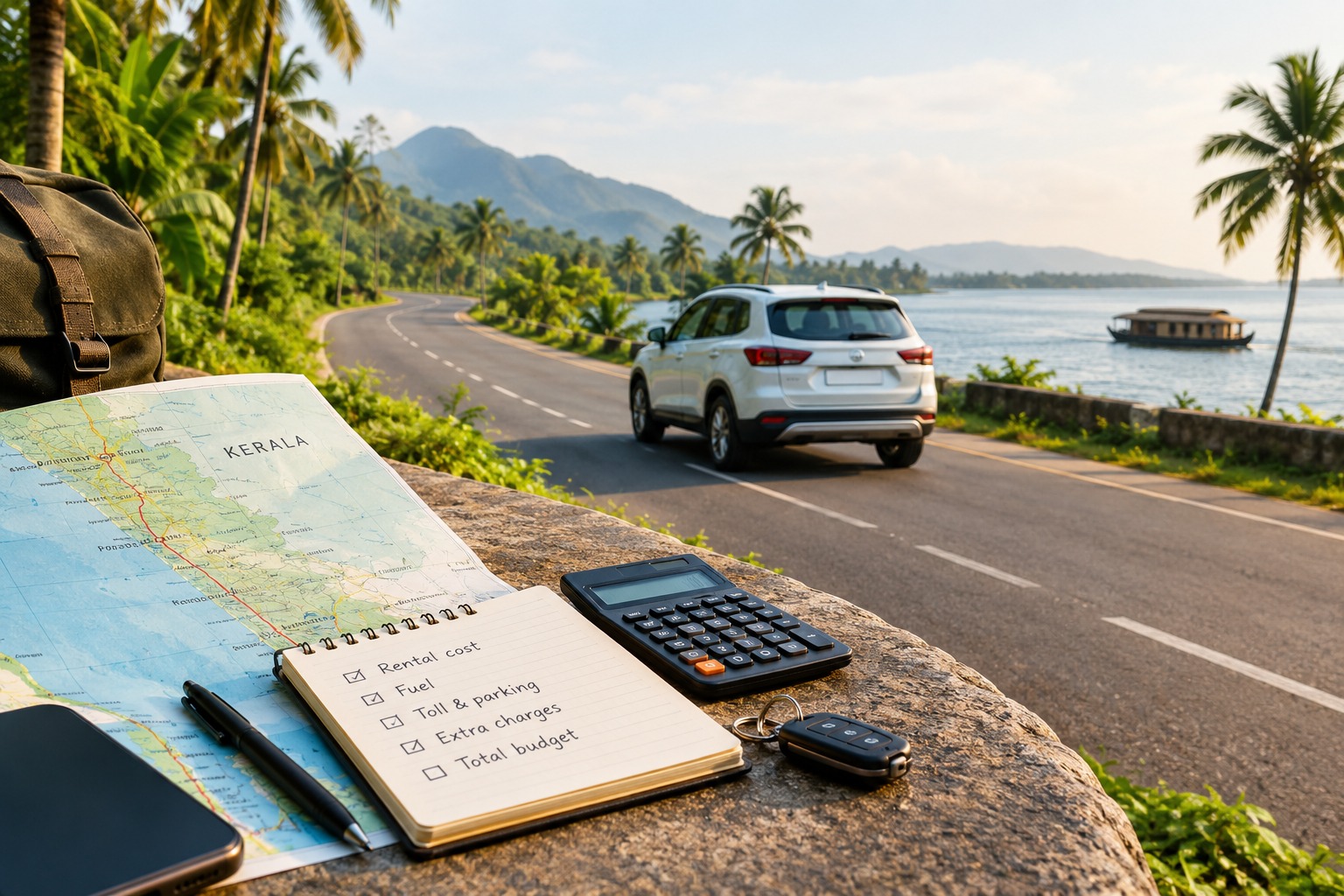
A vehicle that seems cheap upfront might have poor fuel economy, meaning every hill climb toward the high ranges costs substantially more at the petrol pump. Conversely, an option with an marginally higher daily tariff could offer unlimited mileage and far better mileage per litre, balancing out the initial cost within just a few days of active driving. When comparing car rental prices in Kerala, calculate the projected total spend—incorporating expected distance and fuel—rather than fixating strictly on the base daily rental fee.
Matching Vehicle Size to Your Passenger Count and Terrain
It is tempting to book the largest vehicle available under the assumption that bigger always means more comfortable. On Kerala’s roads, this logic frequently backfires. The state’s road network features narrow state highways, bustling town centers with dense two-wheeler traffic, and tight hairpin bends in the Western Ghats. Driving an oversized vehicle through congested town markets or along steep mountain passes increases both driver fatigue and fuel usage.
For solo travellers and couples, a compact or mid-size hatchback is almost always the most sensible choice. These smaller options slip easily through tight coastal lanes, fit into scarce roadside parking spots, and fall into the category of exceptionally fuel-efficient rental cars. A compact hatchback provides ample boot space for two medium suitcases while keeping operating costs remarkably low.
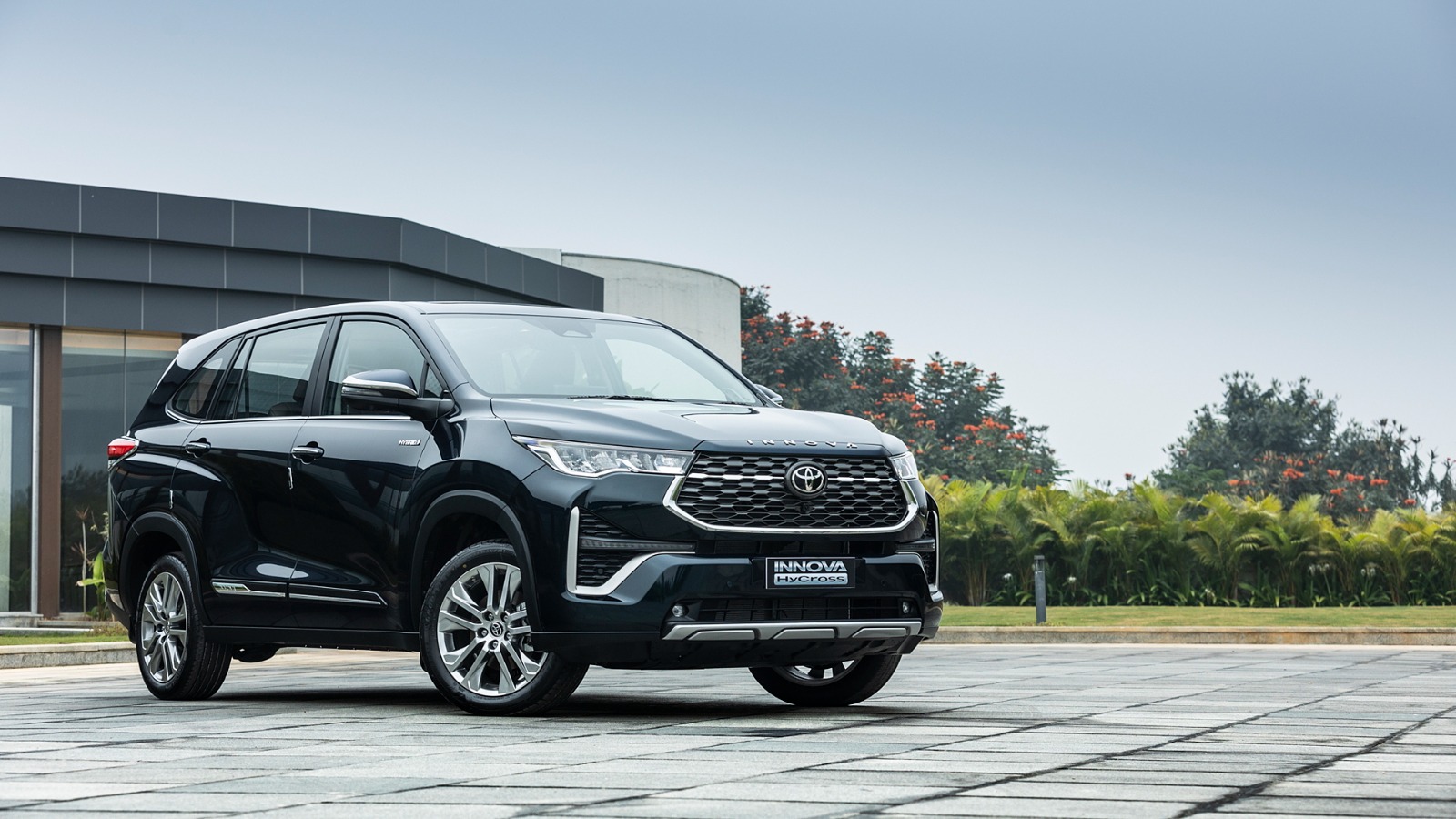
Small families of three or four with moderate luggage will find a balanced sweet spot in a compact sedan or a sub-compact crossover. These vehicles offer dedicated boot space to keep luggage hidden from view during sightseeing stops while maintaining a manageable footprint on narrow roads. Upgrading to a full-size seven-seater multi-utility vehicle only makes financial sense when travelling with five or more passengers or an extensive amount of luggage. Splitting the cost of one appropriately sized larger vehicle among a group is economical; booking a large vehicle for only two or three people simply creates unnecessary rental and fuel overhead.
Manual vs. Automatic: Comfort Versus Running Costs
The choice between a manual and an automatic transmission involves balancing physical comfort against running expenses. Kerala’s driving conditions feature continuous speed adjustments. Coastal routes and arterial town roads often mean moving in second and third gear through steady traffic, while mountain climbs require deliberate gear selection.
Manual vehicles generally carry slightly lower daily rental tariffs and offer better direct control over fuel efficiency if you are accustomed to smooth shifting. However, for visitors who are unfamiliar with driving on the left side of the road or those expecting to spend hours navigating urban bottlenecks around Kochi, Kozhikode, or Thiruvananthapuram, an automatic transmission significantly reduces driving fatigue. Modern automatics have narrowed the fuel-efficiency gap considerably, but they do tend to command a slightly higher base rental price. If your itinerary involves long stretches of slow-moving city traffic, the modest premium for an automatic is often worth the comfort, whereas straightforward highway routes make a manual car an easy budget saver.
The Realities of Kerala Traffic, Roads, and Fuel Consumption
Fuel expenses are where road trip budgets most commonly run off course. Kerala has high population density along its main transport corridors, which means true highway cruising speeds are rare. Between ongoing highway expansion projects, signal-heavy junctions, and steady local traffic, average speeds often hover between 30 and 45 kilometers per hour.
This frequent cycle of braking, idling, and accelerating consumes significantly more fuel than uninterrupted open-road driving. Climbing steep elevation changes further amplifies fuel burn. To keep fuel bills manageable, plan your travel windows wisely. Starting your intercity drives early in the morning allows you to clear congested municipal zones before commercial transport and school traffic peak, leading to smoother cruising speeds and lower consumption. Maintaining steady throttle inputs and resisting sudden overtakes on two-lane roads will also preserve fuel over a long journey.
Trip Duration and Long-Term Rental Value
How long you intend to travel plays a major role in the rates you can secure. Travellers booking for just two or three days typically pay the standard daily rack rate. However, if you are planning an extended tour or visiting as a non-resident returning home for several weeks, standard daily pricing is the least economical route.
Most operators offering self-drive car rental Kerala services provide sliding-scale tariffs for extended bookings. Inquiring about a weekly package or a monthly car rental Kerala arrangement can reduce the effective per-day cost by twenty to forty percent. If your travel plans are somewhat flexible, structuring your itinerary around a defined weekly block often unlocks these lower-tiered rates.
Streamlining Logistics: Deliveries, Pickups, and Local Transit
Where you collect your vehicle directly impacts your initial travel spending. Arriving at major entry points like Cochin International Airport, Trivandrum International Airport, or major railway hubs often leaves travelers at the mercy of airport taxi rates or app-based surge pricing to reach their accommodations.
Arranging for direct airport delivery or doorstep delivery at your hotel through your rental car in Kerala provider eliminates that secondary transit expense entirely. While some companies charge a nominal fee for drop-off services outside their central hub, this fee is frequently lower than hiring an independent taxi for a long cross-city transfer, especially when arriving late at night or during peak transit hours.
Verifying Inclusions, Deposits, and Vehicle Condition
An otherwise budget-friendly road trip can be quickly compromised by unanticipated charges upon vehicle return. Transparent operators will clearly outline the security deposit amount, acceptable payment modes, and the refund processing timeline. Always clarify whether the quoted price includes comprehensive insurance coverage and understand your financial liability limit in the event of minor scratches or dents.
Before driving away from the pickup point, conduct a thorough joint inspection with the rental representative. Take a slow, continuous walk-around video of the car using your smartphone in clear daylight. Capture existing paint scrapes, stone chips, wheel rim scuffs, the condition of the spare tire, and the interior upholstery. Ensure the fuel level and odometer readings are documented on the handover agreement. This straightforward habit protects your security deposit from disputes when returning the vehicle.
A Quick Pre-Booking Checklist
Before finalizing any booking to rent a car without a driver in Kerala, review these essential points:
● Check the mileage policy to confirm whether you have unlimited kilometers or a daily cap with per-kilometer excess charges.
● Match the vehicle category strictly to your actual passenger count and luggage volume rather than booking excess space.
● Verify the security deposit requirement, acceptable payment methods, and the guaranteed refund turnaround window.
● Confirm that the quote accounts for applicable taxes, airport pickup fees, and insurance coverage.
● Choose a pick-up and drop-off schedule that prevents rolling into an unintended extra full-day billing block.
Making a Reliable Final Choice
The foundation of a stress-free Kerala road trip lies in partnering with a legitimate, legally compliant service. In India, authorized self-drive commercial vehicles carry distinct black registration plates with yellow lettering. Booking through a licensed, government-approved rent-a-car provider ensures the vehicle holds valid commercial permits, proper fitness certificates, and the appropriate self-drive insurance cover required by state transport authorities.
By taking a holistic view of your transport costs—prioritizing appropriate vehicle dimensions, respecting local driving conditions, and reading rental agreements with a critical eye—you can keep your road trip expenses fully under control while enjoying the absolute best routes Kerala has to offer.